
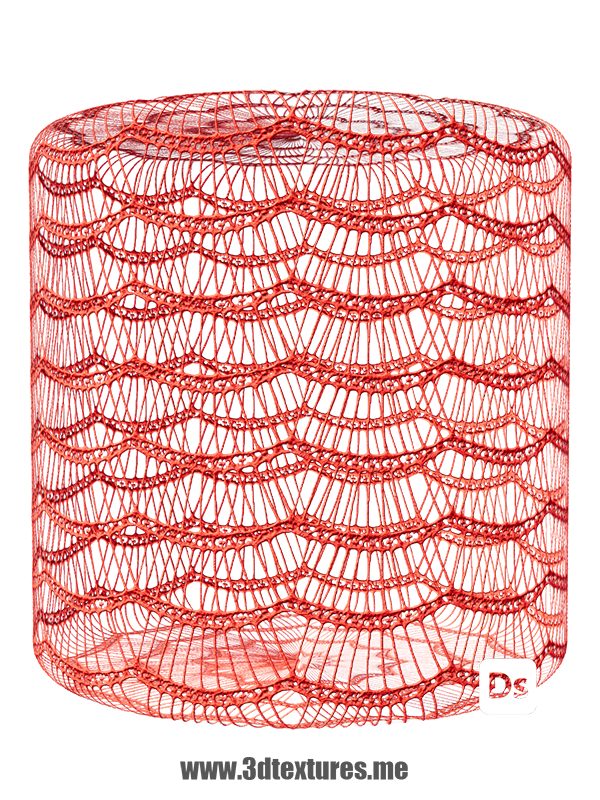
This Fabric Lace 049 is a free seamless PBR material of intricate, delicate textile lace, perfect for simulating antique embroidery, Venetian venetian lace, or Victorian decorative panels.
The immediate draw of this material is its complex, repeating pattern, featuring high contrast between the delicate threads and the negative space. This captures the tactile nature of real lace, complete with subtle variations in thread thickness, weight, and aged patina. The texture conveys both the exquisite craftsmanship of hand-stitched lace and the perfect, repeatable geometry needed for modern architectural design. The overall feel is one of refined elegance, a material that defines a room’s character, whether it’s draped over furniture, used as a decorative wall panel, or mapped onto clothing in a character render. The fine surface detail, coupled with gentle natural wear and slight discoloration, gives the lace a lived-in, authentic quality, making it incredibly versatile for historical or fantasy settings.
Included Maps
This texture ships with the following PBR maps at 1024 × 1024 px (Patreon Tier 3 unlocks the 4K uncompressed PNG version plus the SBS/SBSAR Substance Designer source files):
- Color (Albedo) – base diffuse color
- Normal – surface micro-detail and depth
- Displacement – geometry-level depth for subdivision or parallax
- Roughness – specular control (matte vs. glossy areas)
- Ambient Occlusion – contact shadows baked into crevices
- Opacity – to tell which parts are visible
- ORM (Patreon exclusive) – packed Occlusion/Roughness/Metallic for Unreal Engine. What is an ORM texture?


Engine & Software Compatibility
Drop these maps directly into any PBR-capable software. Tested workflows:
- Blender — connect via the Principled BSDF node. Use Color → Base Color, Normal → Normal Map node → Normal, Roughness → Roughness, Displacement → Displacement node in the material output.
- Unreal Engine 5 — use the ORM map (Patreon) for the packed texture slot, or plug Roughness/Metallic/AO individually into a Material.
- Unity (URP / HDRP) — Color → Albedo, Normal → Normal Map, Roughness → Smoothness (invert the channel).
- Godot 4 — StandardMaterial3D: Albedo → Albedo, Normal → Normal Map, Roughness → Roughness.
- Maya / 3ds Max / Cinema 4D — compatible with Arnold, V-Ray, and Redshift via their PBR shader nodes.

Best Use Cases
Not sure where to apply this texture? Here are some ideas from the community:
- Victorian and Gothic Interior Archviz: Window curtains, draped table linens, decorative paneling, or ornate wallpaper.
- Fashion and Character Design: High-detail costume elements, collars, sleeves, and overlays in character renders.
- Fantasy and Historical Game Environments: Period costume elements, decorative structural lace barriers, or aged material details in dungeon environments.
- Concept Art and Matte Paintings: Used as a foreground or background element to convey a sense of age, elegance, or decay.
- Digital Product Design: Texturing product materials like luxury furniture, fine china, or decorative textiles.
- Website and UI Design: High-resolution background textures for creating an elegant, aged aesthetic.
- Decay and Corruption Mapping: Utilizing the lace pattern to show a delicate, structured form of decay or binding.
Tiling & Technical Notes
The texture is designed to be fully seamless, allowing it to repeat indefinitely without visible breaks. Because lace is inherently a woven/stitched pattern, be mindful of the grain and flow of the pattern, while it tiles perfectly, the visual flow might suggest a direction (the warp or weft). When tiling large surfaces, consider a slight UV offset to subtly break the sense of absolute repetition and increase realism.
The delicate nature of lace makes it highly sensitive to color grading. A slight desaturation and cool shift can emphasize the age and melancholy, while a warmer sepia or gold tint can push it toward an opulent, historical aesthetic. For architectural use, treat the lace as an applied paneling or stencil, utilizing the Displacement map to truly push the motifs off the surface geometry.
The color and roughness can be fully modified with the Substance Designer source files available to patrons.
License: CC0 (Public Domain) — free for personal and commercial use, no attribution required. Full license details
You Might Also Like
If you’re working on a similar project, check out these related textures:
-
- Fabric Lace 042 — Another beautiful variation of seamless lace perfect for drapery or paneling.
- Fabric Lace 026 — A distinct pattern offering a slightly different depth and tonal variation.
- The Fabric Category — Browse the full collection for embroidery, jute, and other woven materials.
Frequently Asked Questions
Can I use this texture in a commercial game or product?
Yes. All textures on 3dtextures.me are released under CC0, which means they are effectively public domain. You can use them in commercial projects without attribution.
What resolution is included for free?
The free download is 1024 × 1024 px. Patreon Tier 3 unlocks 4K (4096 × 4096 px) uncompressed PNGs plus the Substance Designer source files.
How do I download all textures at once?
A bulk download link is available to Ko-Fi supporters and Patrons.
Support on Ko-Fi to receive the folder link.
What is a seamless / tileable texture?
A seamless texture has matching edges on all four sides, so it can be repeated infinitely across a surface without a visible seam or border. All textures on this site are seamless.
What are SBS / SBSAR files?
These are Substance Designer source files that let you modify the texture parameters colour, roughness, scale, etc.) non-destructively. Available to Patreon supporters.


